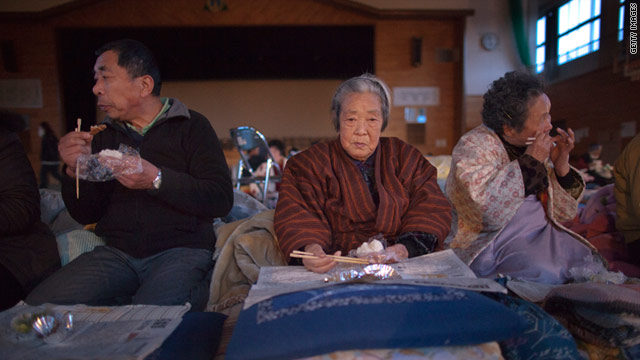
Japan being populated with nearly a quarter of its people aged 65 or older, the recent disaster has been a haevy burden for Japan's elderly to bear. The 9.0-magnitude earthquake and tsunami that hit the northeastern coast of Japan wiped out rural villages and towns. Rural areas such as those same towns and villages are largely filled with elderly communities because younger people most likely to reside in the city. As the focus shifts from rescue to relief and recovery efforts, Japan's elderly victims facechallenges in the weeks, months and even years ahead, experts say. Sarah Harper, who studies implications of aging societies said "When faced with disaster, older people are physically and psychologically affected in different ways than younger people." This is a stressing issue because the elderly are vulnerable to the effects of a disaster like this, but dealing with the loss of family members, homes and possessions ae even more to handle, finding themselves now far more dependent on outside help more then they've ever have been. With deccreasing flexabilty and weakened immune systems, the elderly are at much higher risks than others to falling ill. Japanese Red Cross medical teams have been treating the elderly for hypothermia and infectious diseases such as influenza.
Many of them lost medication for chronic diseases such as hypertension and diabetes while fleeing the double disaster.
Many of them lost medication for chronic diseases such as hypertension and diabetes while fleeing the double disaster.

No comments:
Post a Comment